The church of Marsalforn is dedicated to Saint Paul’s Shipwreck. As
recorded in the Acts of the Apostles, St. Paul was shipwrecked on
Malta. According to tradition it was from Marsalforn that he
subsequently embarked for Sicily and Rome.
Description
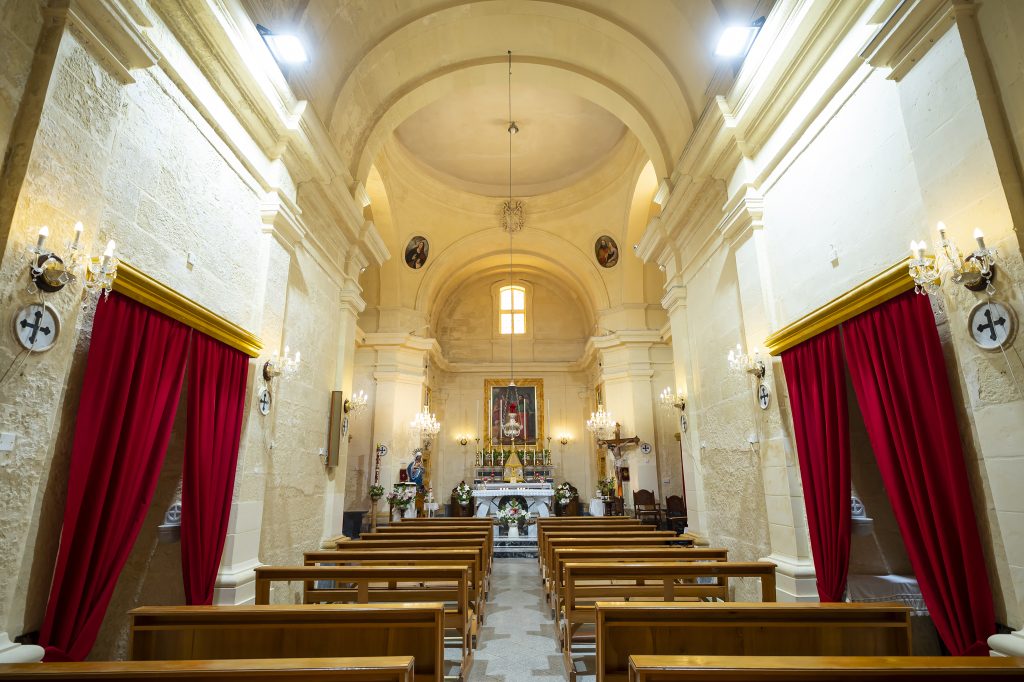
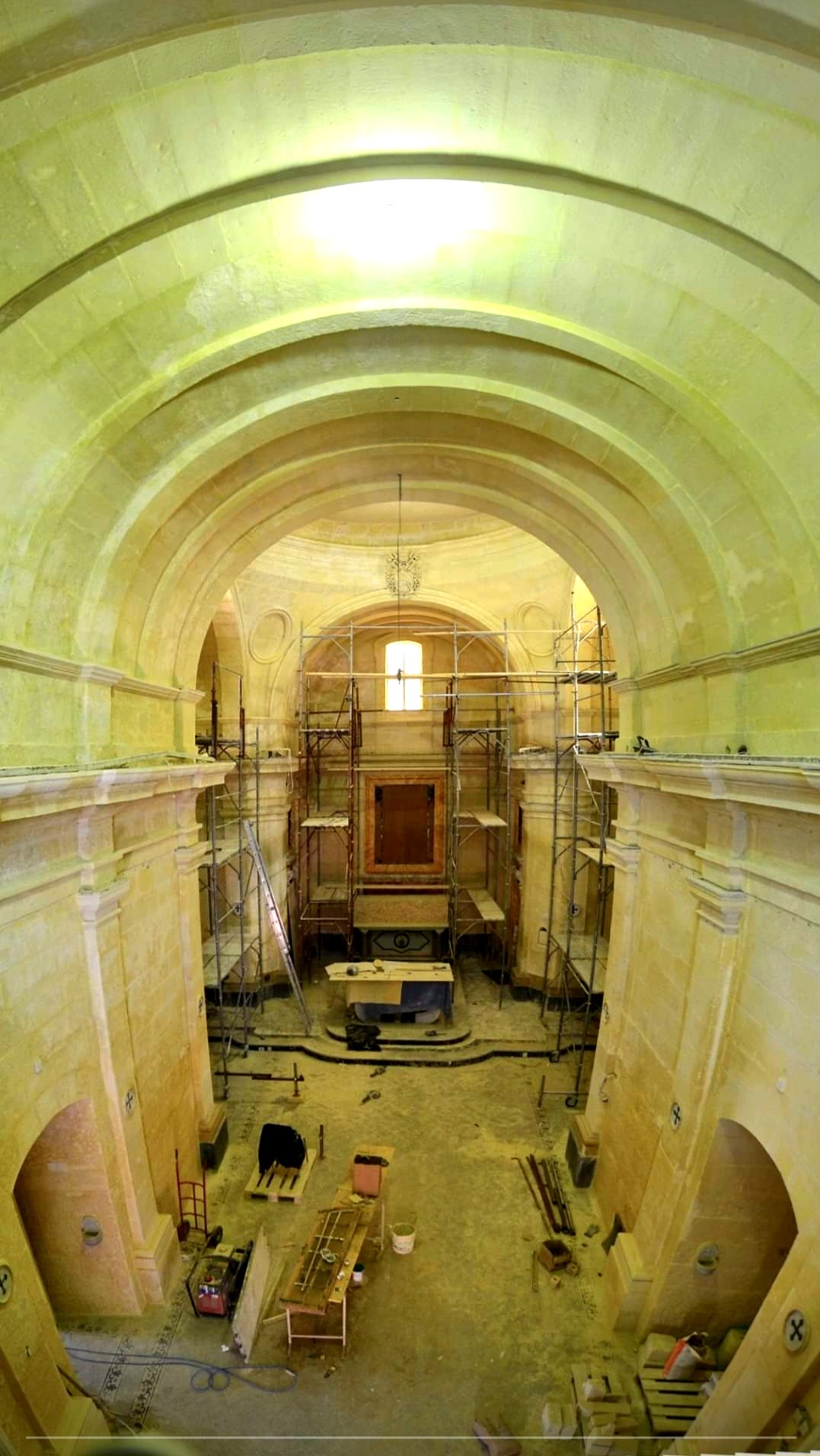
The interior of the church is typical of the architecture of the 18th
century. Built on a simple plan with an aisle without side chapels,
today the church has two halls on each side, extensions that were built
in the 20th century. These extensions have entryways under the lateral
paintings representing The Virgin of Sorrows and Sacred Heart of
Jesus. The extensions were built in order to make it possible for the
church to accommodate an ever-growing community which highly
increases during the summer months as Marsalforn’s population
significantly rises.
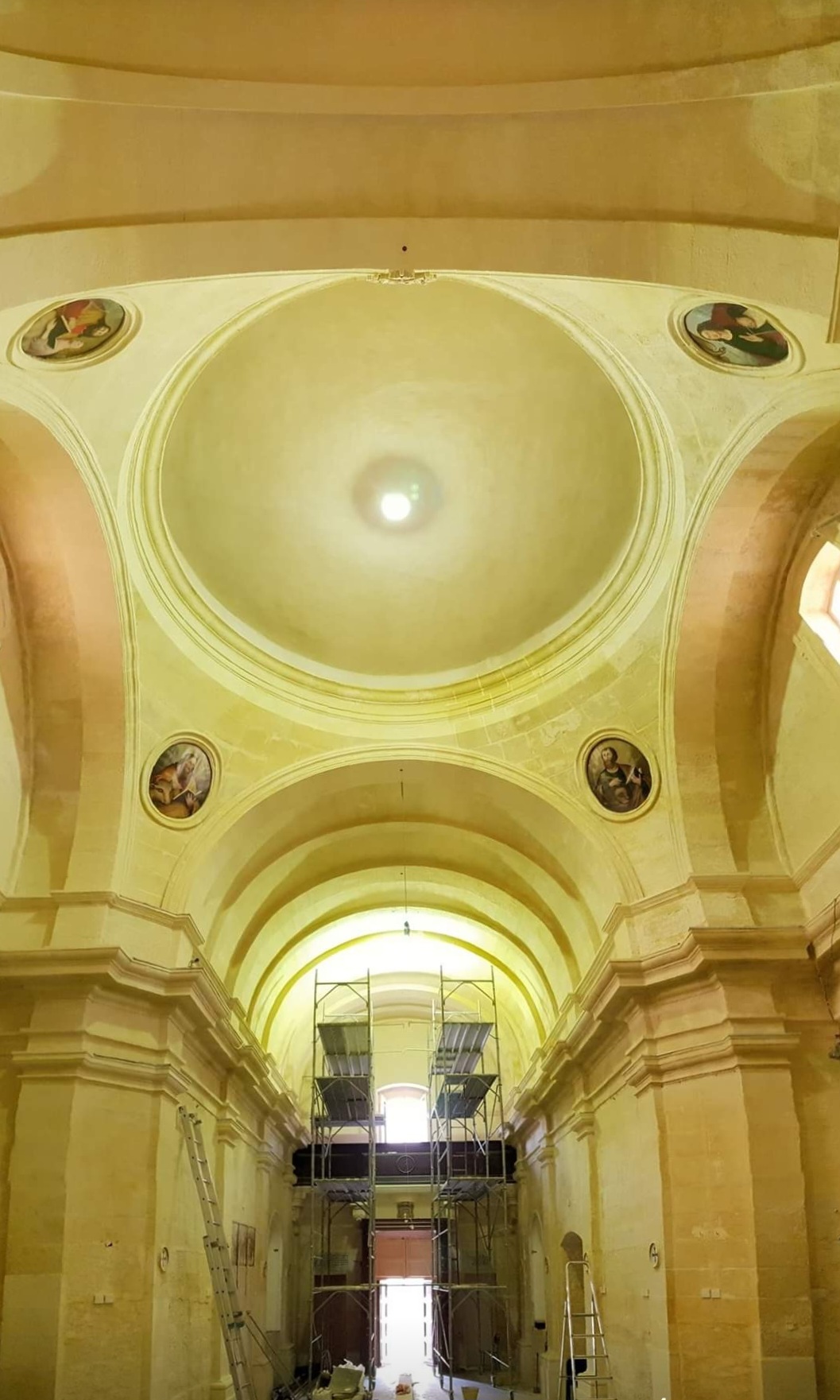
While the side walls of the church are rather plain, the ceiling is an
elegant structure in the form of a barrel vault that sits on a beautifully
carved cornice. The church has a peculiar roofed low dome, in the
middle of which one finds a highly ornate stone coat of arms while four
oval-shaped paintings adorn its pendentives.
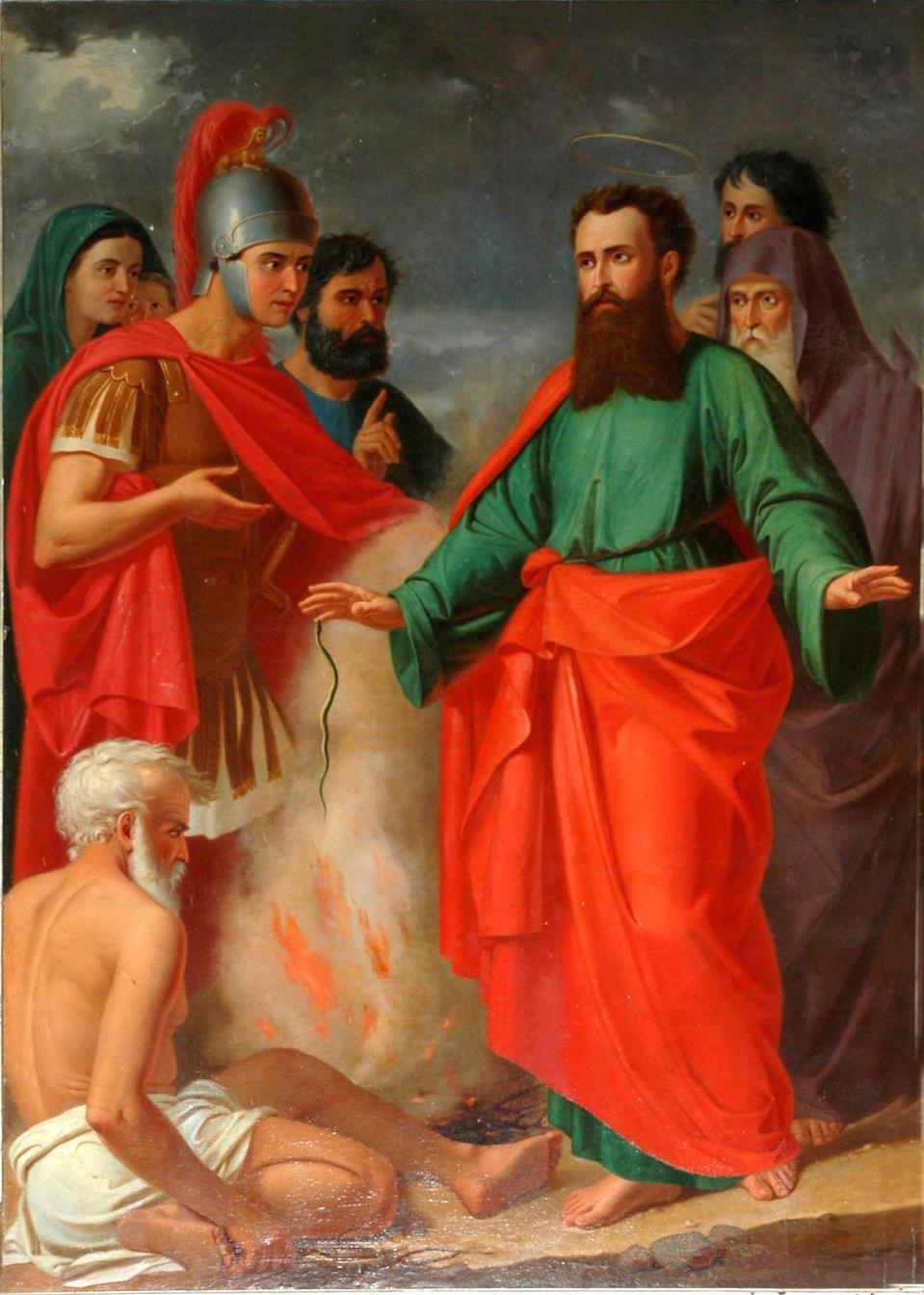
The titular painting of the church, an oil on canvas representing The
Shipwreck of St. Paul was executed by Giuseppe Bonnici (1835-1900).
Saint Paul is depicted being brushing off the viper as some figures
including a Roman general look on. The main altar is made of marble
as is also the table altar. The painting representing Our Lady of Sorrows
was executed by Ignazio Cortis (1826-1898) in 1875 while that of the
Sacred Heart is by an unknown artist. The church contains several
other paintings including those of the Four Evangelists, of Saint
Andrew as well as another canvas representing Saint Francis Xavier.
Apart from these canvases, there are also two large works
representing The Conversion of Saint Paul and The Martyrdom of St.
Paul.
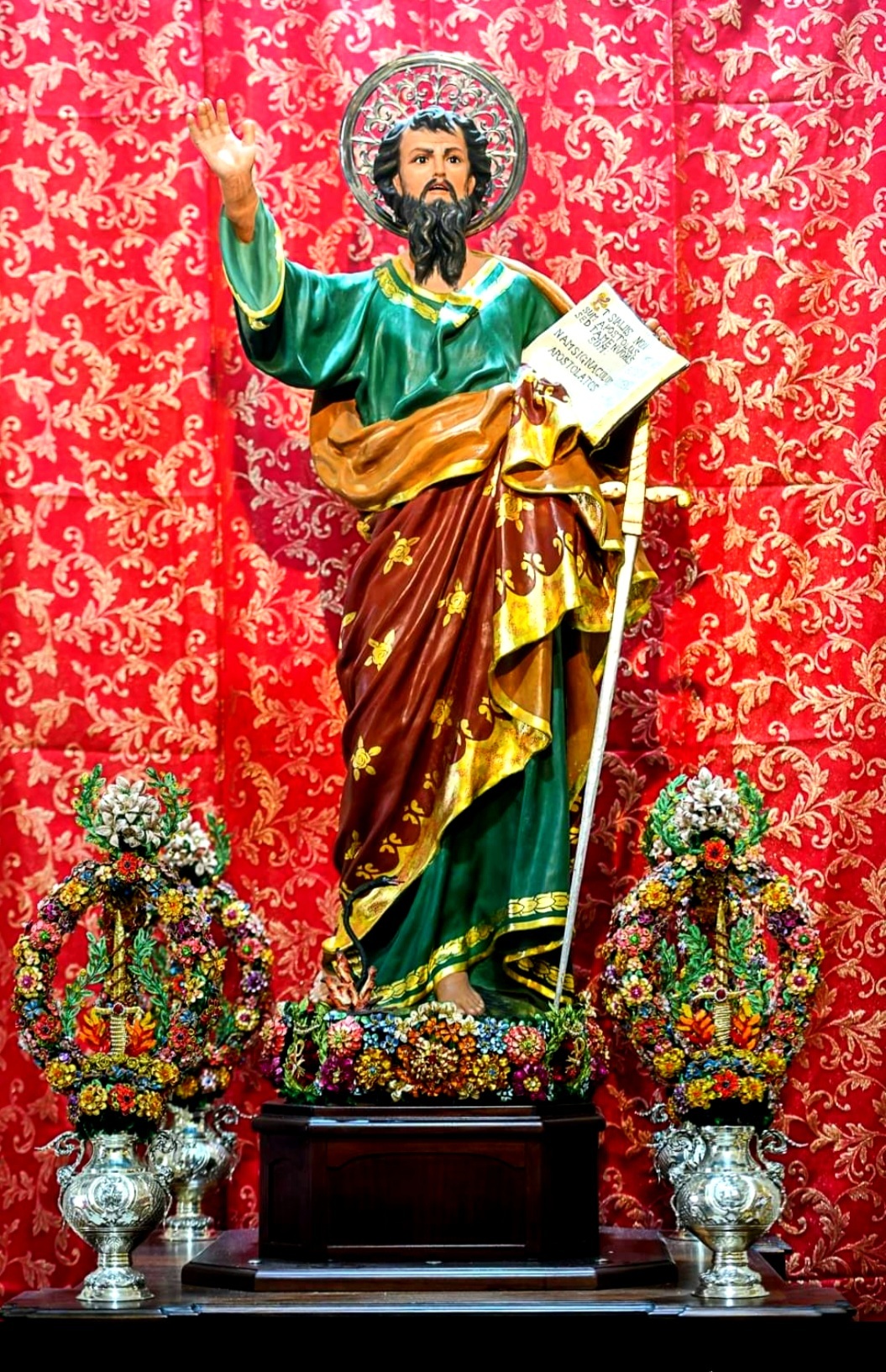
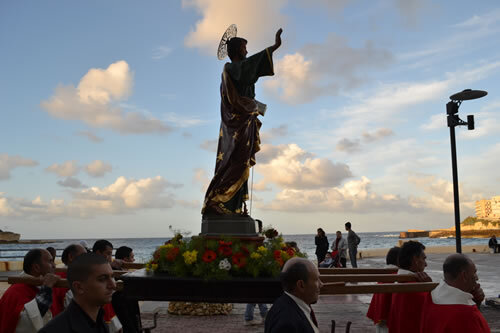
The papier maché titular statue of Saint Paul was executed in 1925 by
Agostino Camilleri (1885 -1979). It is taken out in the procession on
the feast day of the Shipwreck of San Paul, that is on February 10,
which is also a public holiday. The feast is celebrated with the support
of both the Żebbuġ Local Council and Xagħra Local Council. Camilleri
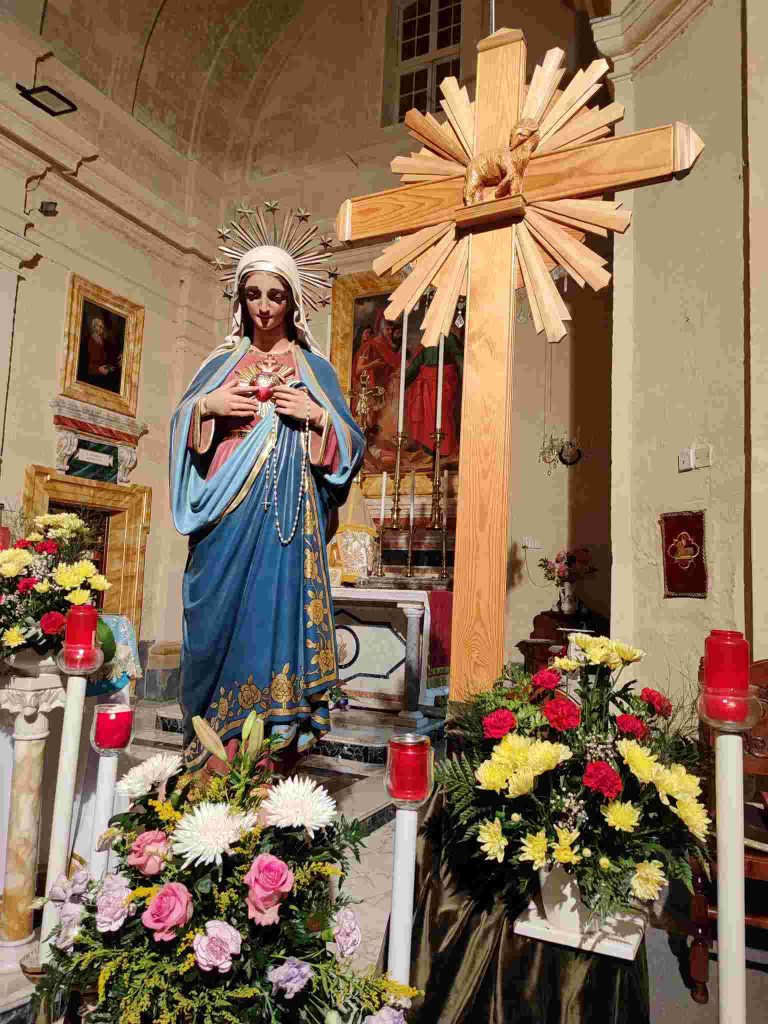
also produced the statue of Saint Joseph (1959). In the church we also
find statues of the Immaculate Conception and of the Sacred Heart of
Mary. The floor of the church was commissioned in 1933, while the
marble altar of the Virgin of Sorrows was installed in 1963.
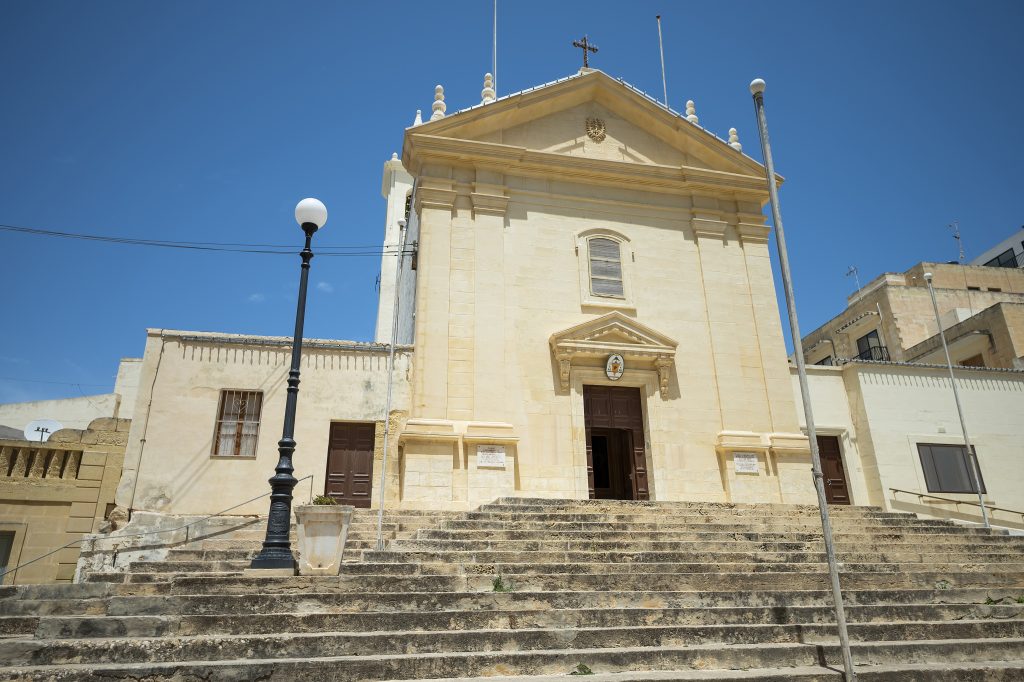
Crowned by a triangular pediment, the façade is made up of a central
bay with an elegant main door. Stylistically it is reminiscent of
renaissance Maltese church architecture designed centuries earlier by
Tommaso Dingli. On the sides, two pairs of pilasters complement the
plain central bay. On top of the main door, a window serves as a source
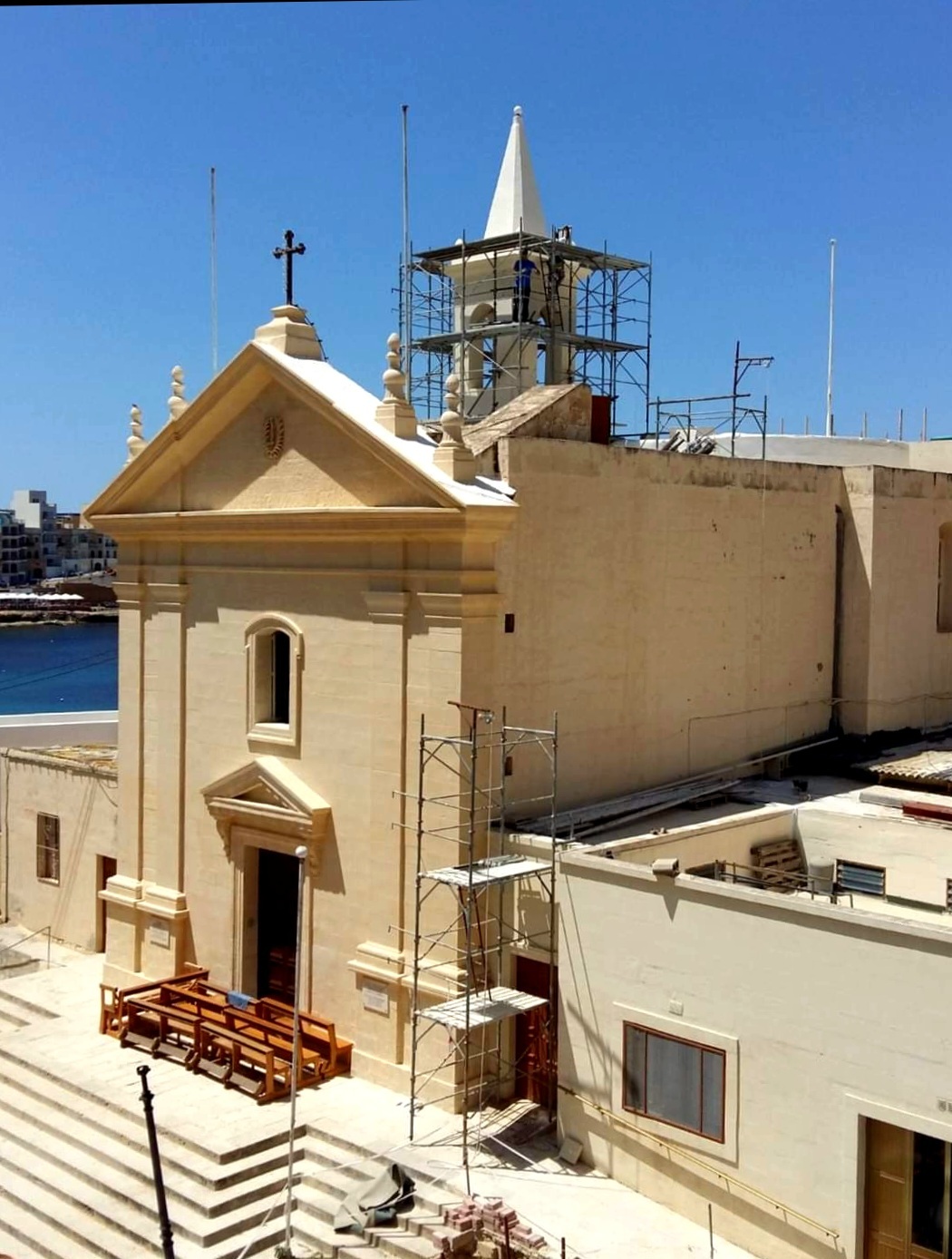
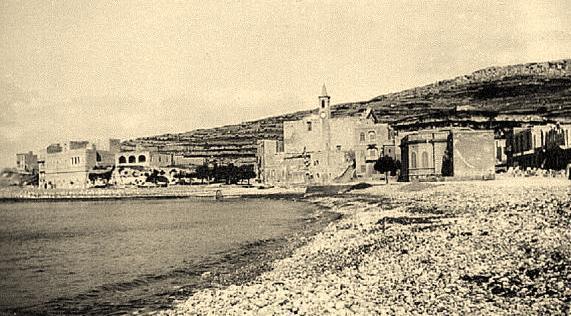
of light to the church’s interior. At the back the church one finds a
pointed belltower that is so typical of Marsalforn. Unfortunately bad
urban planning in the vicinity of the church has obliterated the original
skyline of Marsalforn, a skyline that for centuries was dominated by
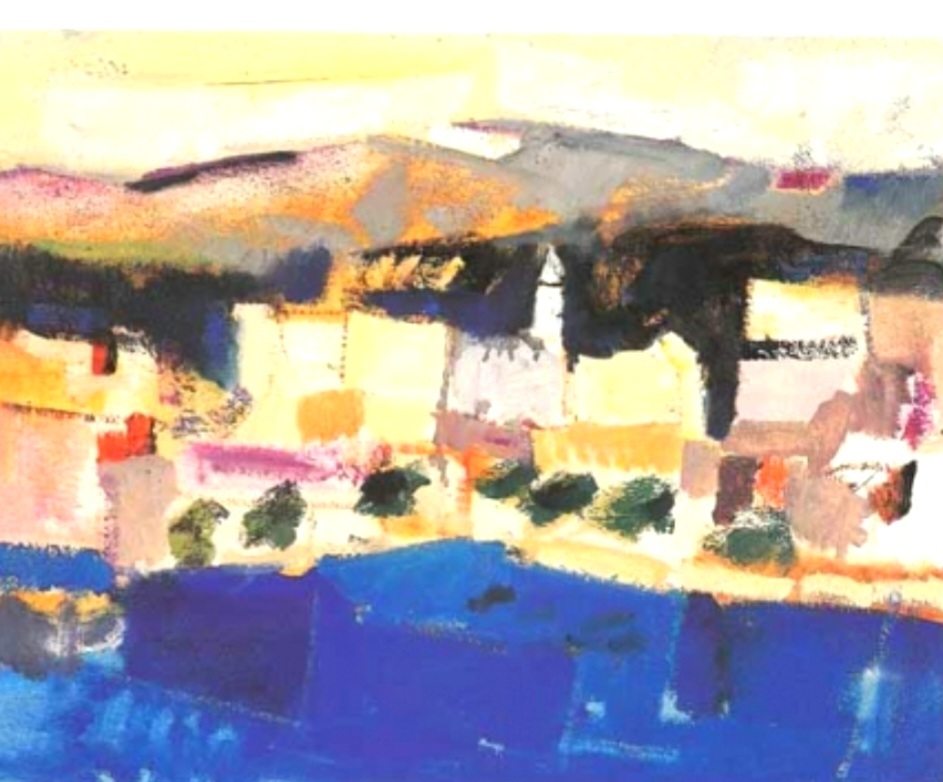
this belltower. The latter inspired several photographers and artists
including Pawl Carbonaro (1948- ) who depicted it in several oil
paintings and prints.
Historical background
The church of St. Paul was originally built in the 14th century but has
subsequently been rebuilt and enlarged many times. The church is
mentioned in the report of the pastoral visit by Bishop Luca Bonus in
1667, making reference to the dire state of the church. The situation
had changed by 1687, when Bishop Davide Cocco Palmieri found it in
a good condition having been repaired and rebuilt.
The foundation stone of the present church was laid in 1730. In the
second half of the 19th century restoration works on the outside walls
were carried out, with the expenses being paid by Parish of the
Nativity of Xagħra.
An interesting legend is ascribed to St. Paul’s church. In 1726 an
embroidered altar cloth was stolen from the church by a sailor. His
galley could not lift the anchor successfully to leave the port until the
sailor retuned the stolen object.
In 1813 Archbishop Ferdinand Mattei blessed the largest bell erected
in the belfry of St. Paul’s Church.
Recent restoration
In 2020 the church of St Paul was thoroughly restored. Both the
facade and the interior were skilfully restored thanks to the European
Regional Development Funds managed by a commission set up by the
Gozo Curia. Architect Edward Scerri supervised the works, which
included the cleaning and conservation of the original stone, the
scraping of several layers of concrete plastering applied in the past and
the re-installation of several lateral paintings that were taken down
after the enlargement of the church.
References:
Vella, H. C. R. (2018). Żebbuġ of Gozo – Its People, Inscriptions and
History. Malta: Print It
Photo credits: Gozo Diocese, Xagħra Parish, Rev. Can. Michael Borg,
jjpzammit
Research: Mario Cassar
Copyright: Soċjeta’ Banda Santa and Żebbuġ Gozo Local Council